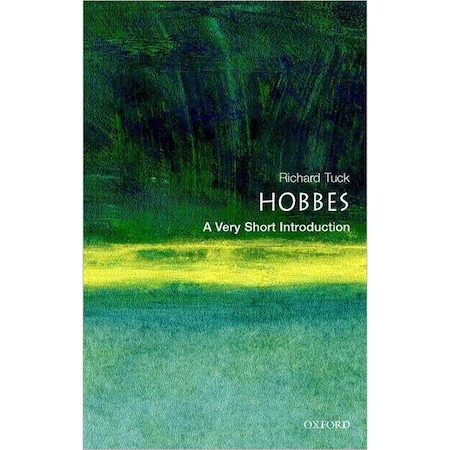
Thomas
Hobbes,
the
first
great
English
political
philosopher,
has
long
had
the
reputation
of
being
a
pessimistic
atheist,
who
saw
human
nature
as
inevitably
evil
and
proposed
a
totalitarian
state
to
subdue
human
failings.
In
this
illuminating
study,
Richard
Tuck
re-evaluates
Hobbes's
philosophy
and
dispels
these
myths,
revealing
him
to
have
been
passionately
concerned
with
the
refutation
of
scepticism,
and
to
have
developed
a
theory
of
knowledge
which
rivalled
thatof
Descartes
in
its
n/a
THE
SERIES:
The
Very
Short
Introductions
series
from
Oxford
University
Press
contains
hundreds
of
titles
in
almost
every
subject
area.
These
pocket-sized
books
are
the
perfect
way
to
get
ahead
in
a
new
subject
quickly.
Our
expert
authors
combine
facts,
analysis,
perspective,
new
ideas,
and
enthusiasm
to
make
interesting
and
challenging
topics
highly
readable.
Recenzii
Review
from
previous
edition
lucid
introduction
to
the
first
great
English
political
philosopherVery
useful
for
students
-
comprehensive,
concise
and
clearly
written.A
useful
introductory
text,
particularly
in
so
far
as
it
makes
the
results
of
more
recent
scholarship
readily
available
to
undergraduates.
Nota biografica
Richard
Tuck
is
Professor
of
Government
at
Harvard
University.
He
is
the
author
of
Natural
Rights
Theories
(1979)
and
Philosophy
and
Government
1572-1651
(1993),
and
has
produced
editions
of
Hobbes's
Leviathan
and
(with
Michael
Silverthorne)
De
Cive.